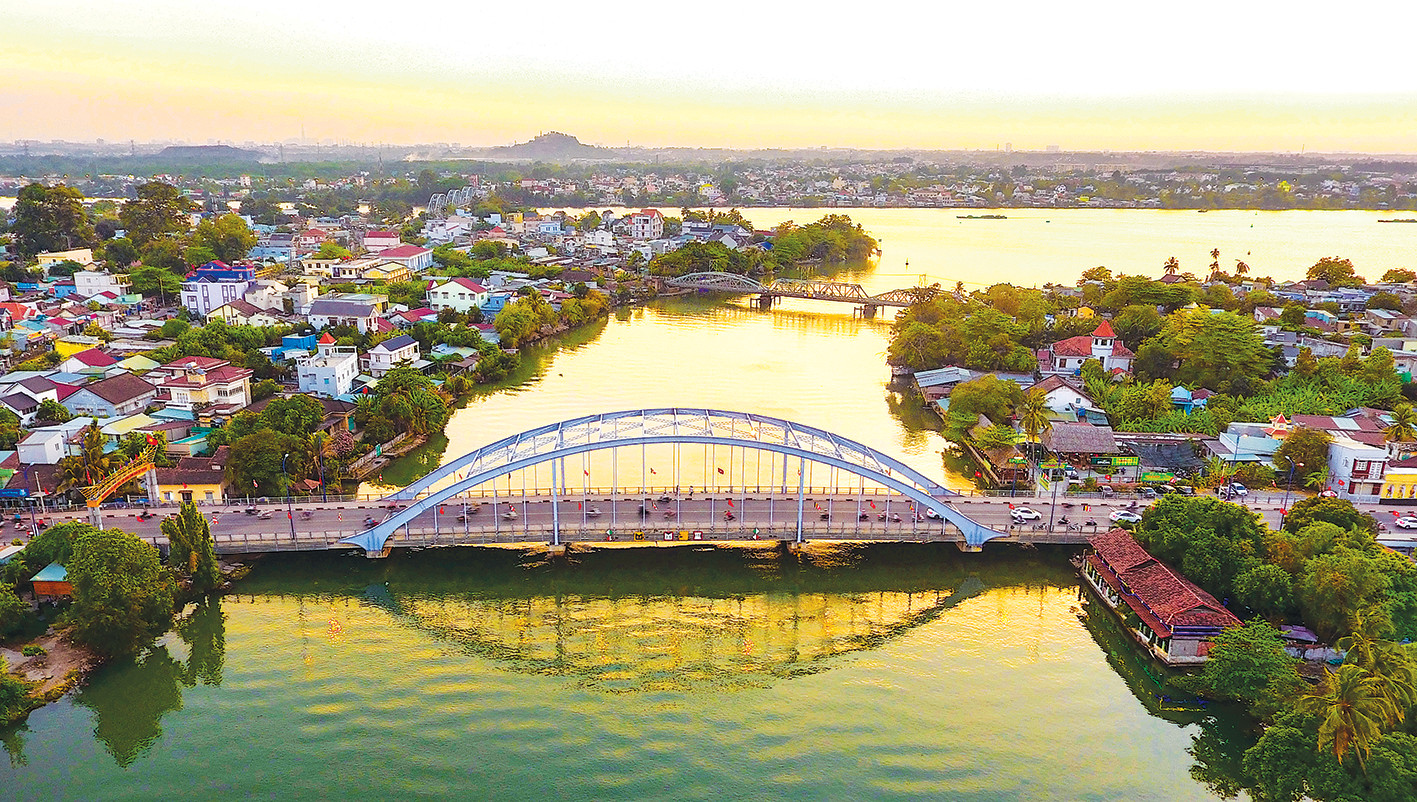
DONG NAI BECOMES A CENTRALLY GOVERNED CITY
1. A Landmark Administrative Upgrade
On April 24, 2026, the National Assembly officially passed a Resolution establishing Dong Nai as a centrally governed city, effective from April 30, 2026, based on its existing natural area and population scale.
With this decision, Dong Nai becomes the 7th centrally governed city in Vietnam, marking a significant transition in its urban development trajectory and regional economic restructuring. Prior to this, on April 16, 2026, the Ministry of Construction recognized Dong Nai as a Grade I urban area, fulfilling a key prerequisite for this administrative upgrade.

2. Strategic Position and Growth Drivers
Located at the heart of the Southeast region, Dong Nai serves as a direct gateway to Ho Chi Minh City while connecting to the Central Highlands, South Central Coast, and major international trade corridors. This strategic position, combined with increasingly integrated infrastructure, creates a distinct competitive advantage for the province.
A key highlight is Long Thanh International Airport—the largest aviation infrastructure project in Vietnam—serving as a transformative growth engine. In parallel, the rapid development of expressways, ring roads, logistics networks, ports, and railways, together with a well-established industrial base built over decades, continues to reinforce Dong Nai’s development momentum.

These factors not only enable accelerated local growth but also position Dong Nai as a key growth pole with strong spillover effects across the Southeast region and the national economy.
3. Economic Scale and Sustainable Growth Foundation
In recent years, Dong Nai has maintained robust economic growth, driven by the expansion of industrial zones, logistics, and large-scale infrastructure projects. In 2025, the province recorded a GRDP of approximately VND 678 trillion, with state budget revenue exceeding VND 103 trillion and GRDP per capita reaching VND 152.8 million, contributing around 5% of Vietnam’s GDP.
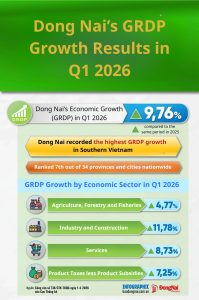
Dong Nai is among the largest economies in the country and remains a highly attractive destination for foreign direct investment, particularly in manufacturing and processing industries.
4. Development Planning: Multi-Centric and Integrated Approach
Dong Nai’s development planning is structured in a highly coordinated and integrated manner, with two primary growth drivers: Long Thanh International Airport and the Dong Nai River corridor.
On this foundation, the province’s spatial structure is organized into five socio-economic zones, four development spaces, six economic corridors, and three ring roads, aiming to optimize connectivity and minimize overlap.
Key urban areas such as Bien Hoa, Long Thanh, Nhon Trach, and Trang Bom are undergoing planning finalization, while the administrative center is expected to be located in Tran Bien Ward (in present-day Bien Hoa), serving as the core hub for future urban governance and development.
SEVEN CRITERIA FOR CENTRALLY GOVERNED CITY STATUS
- Population scale: Dong Nai’s projected population reaches approximately 4,491,408 people, significantly exceeding the minimum requirement of 2.5 million.
- Natural area: The total natural area stands at 12,737.18 km², well above the minimum threshold of 2,500 km².
- Ratio of wards to total commune-level administrative units: The province has 33 wards out of 95 commune-level units, equivalent to 34.73%, surpassing the required minimum of 30%.
- Urbanization rate: The urban population totals 2,429,835 people, accounting for 54.1% of the total population, exceeding the minimum requirement of 45%.
- Position and function: Dong Nai is identified as a key national growth pole, serving as a major economic connectivity hub, an international gateway, and a regional and national center for education, logistics, and science and technology.
- Urban classification: On April 16, 2026, Dong Nai was officially recognized as a Grade I urban area, fulfilling this mandatory criterion.
- Socio-economic structure and development level: Dong Nai ranks among the most industrialized localities in Vietnam, with one of the largest economic scales, strong fiscal performance, and robust FDI attraction. Its multimodal transport infrastructure—including aviation, maritime, and interregional road networks—further reinforces its strategic role in economic development and national defense in Southern Vietnam.
5. Dong Nai and Its Distinctive Advantages
Dong Nai stands out with a number of leading advantages. It has the largest number of industrial zones in Vietnam, with a total of 89 planned by 2030, of which 58 have been established and 43 are already operational.
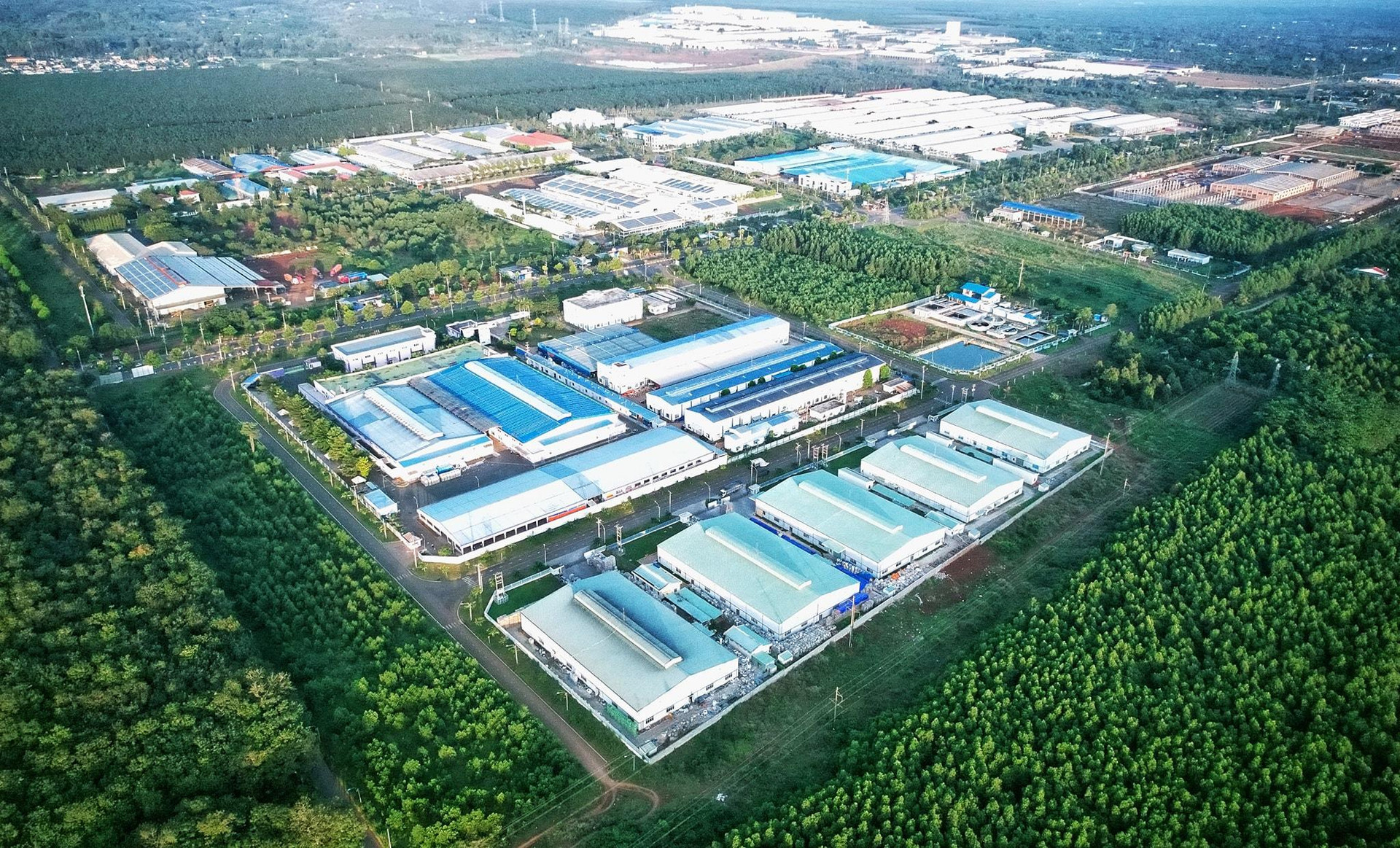
The Bien Hoa Industrial Zone, established in 1963, is the earliest industrial park in the country and has played a crucial role in supporting domestic production and exports over more than four decades of economic reform.
In addition to industry, Dong Nai is also a national leader in agriculture. The province has the largest pig herd in Vietnam, with over 4.1 million heads, supplying approximately 70% of pork to Ho Chi Minh City and southern provinces. It is also considered the country’s “cashew capital,” with nearly 176,000 hectares of cultivation—accounting for almost half of Vietnam’s total cashew-growing area—and serves as a major hub for processing and exporting cashew kernels.
Dong Nai was also the first locality in Vietnam to cultivate rubber and currently has the largest rubber plantation area nationwide, exceeding 242,000 hectares (about 26% of the national total), along with leading processing capacity for both domestic consumption and export.
The province is home to Long Thanh International Airport, the largest airport project in Vietnam, covering 5,000 hectares with an estimated total investment of over USD 16 billion. Phase 1 alone requires more than USD 5.4 billion, with a designed capacity of 25 million passengers and 1.2 million tons of cargo per year. The project is expected to be completed by the end of 2026.
Dong Nai also leads the country in expressway development, with 10 expressway routes passing through the province, accounting for approximately 11.6% of total national projects. In addition, Tri An Lake—the largest man-made hydropower reservoir in Vietnam, covering over 300 km²—further adds to its strategic resource base.
6. Investment Perspective: An Institutional Upgrade Driving a New Growth Cycle
The elevation to a centrally governed city represents not merely an administrative change, but a significant institutional upgrade with far-reaching implications for the investment environment.
Firstly, it enhances Dong Nai’s international visibility and credibility, thereby strengthening its ability to attract FDI, particularly in high-tech industries, logistics, and large-scale manufacturing. At the same time, the new status enables preferential access to central government resources, accelerating the implementation of key infrastructure projects.
Over the medium to long term, the combination of strategic infrastructure—most notably Long Thanh International Airport—well-structured planning, and a strong industrial base will support Dong Nai’s transition toward a higher value-added economic model.
| As emphasized by Vice Chairman of the Provincial People’s Committee, Nguyen Kim Long:
“With its strategic geo-economic position and increasingly well-developed infrastructure system, Dong Nai is well-positioned to become a key international trade gateway, a central hub connecting economic corridors and regional supply chains, and a competitive growth pole in Southeast Asia.” |